
Hantavirus explained: What to know after the cruise ship outbreak
Stay strong at any age with 4 basic exercises
Why testosterone levels drop and when to consider treatment
Don’t count on daily aspirin to prevent colon cancer
Night owls’ habits linked to worse heart health
After ablation, exercise may lower atrial fibrillation recurrence
What can cause an enlarged heart?
Women’s unique risks for heart disease
Chronic kidney disease: A hidden threat to your heart
Navigating your online patient portal: Best practices
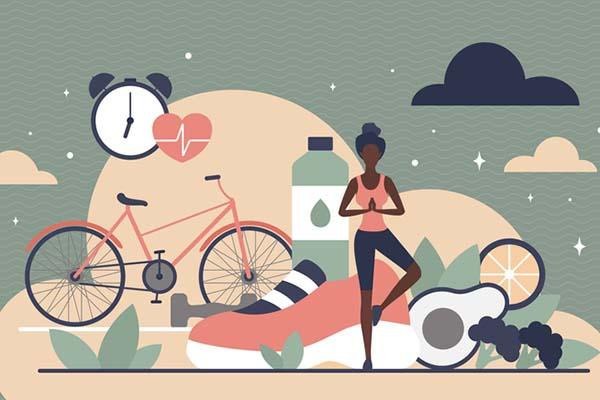
A veritable avalanche of influencers, news headlines, and well-meaning friends and family offer conflicting advice on wellness. If you’re overwhelmed by fads and hype around wellness, read on. Dr. Wynne Armand, a primary care physician at Harvard-affiliated Mass General Brigham health care in Boston, recommends five simple habits to boost health and wellness in everyday life.
Quick fixes and fads may do little for our health, and some even prove harmful. Try to work healthy habits into your daily routines. If you’re a parent, sharing and modeling them can help children and teens embrace wellness, too.
Mindfulness and meditation are overlapping techniques proven to ease stress, improve sleep, and enhance concentration. “Anxiety and stress are very common issues in my practice,” says Dr. Armand. Worrying too often about the past or future is rarely helpful. The too-frequent release of stress hormones affects our heart, brain, and sleep, all of which have downstream consequences for our health.
Practicing mindfulness – whether simply by appreciating birds and plants on a walk in green space, or using apps like Calm and Headspace – anchors you in the present moment. This can calm anxiety, improve focus and concentration, and amp up positive feelings. When applied to eating, mindfulness may help with weight loss by encouraging people to slow down to savor meals.
Meditation knits together body and mind by focusing on sensations, such as breathing, images, or a repeated word or phrase. One exercise that works equally well for adults and younger people is box breathing. The rhythmic pattern of breathing helps regulate the nervous system, reining in anxiety and stress, lowering heart rate and blood pressure, and boosting focus. The rhythmic pattern of breathing helps regulate the nervous system, reining in anxiety and stress, lowering heart rate and blood pressure, and boosting focus.
Sleeping poorly can leave you feeling awful – snappish, foggy-headed, slow moving – and take a toll on your health over time. By contrast, getting sufficient, restful sleep supports the immune system, helps control weight, and aids physical well-being, mental well-being, memory, judgment, and other cognitive functions. It may even extend longevity.
But how much sleep do you need? That varies with age and other factors: most adults need at least seven hours per night, according to the Centers for Disease Control and Prevention. However, sleep quality (a measure of refreshing, uninterrupted sleep versus tossing and turning) may be more important than nailing seven hours. And it’s worth noting that too much sleep – nine hours or more in one analysis of multiple studies – is linked to higher risk for early deaths, too.
Be aware that sleep patterns and circadian rhythms that help rule sleep and wakefulness change over time. Good sleep hygiene can help. Tips include getting regular exercise, setting regular bedtime and wake-up times, avoiding caffeine in the afternoon and evening and large meals and alcohol before bedtime, and turning off screens at least 30 minutes before going to bed.
If you have trouble falling asleep, wake repeatedly at night, or often feel tired during the day, talk to your doctor about ways to improve your sleep. In some cases, sleep apnea, which can raise risk for many health issues, or another sleep disorder may be preventing restful sleep.
A wealth of evidence shows that diets rich in vegetables, fruits, legumes and pulses like lentils, peas, and beans, and minimally processed foods support longevity and vitality. Plant-based and plant-forward diets are better for our health: research links them to lower rates of heart disease, certain cancers, and chronic illnesses like diabetes and obesity. They’re better for the planet, too.
When foods are processed, their health and nutritional value often decline, partly due to additives. “Industries are adding ingredients like excess salt, sugar, artificial sweeteners, colorings, and other chemicals that may be unhealthy or trigger reactions in the brain to keep us craving more,” says Dr. Armand.
The hurry of life often short-circuits opportunities to be active. So, swap out the thought “What saves me time?” for a healthier one: “What keeps me mobile, flexible, and functioning well within my world?” Polishing off exercise requirements through a 30-minute block once daily is great, but you may reap even greater health and well-being benefits if you seek out ways to stay active throughout the day.
“Stop thinking about efficiency and think instead about pleasurable or creative ways to keep your body active,” suggests Dr. Armand. Combine exercise with work or pleasure: instead of meeting on Zoom, walk and talk. Instead of sitting with friends for a meal, socialize over coffee followed by a walk.
Of course, many people experience mobility challenges due to age, illness, or accident. Look for opportunities that suit your needs or move beyond your comfort zone, possibly through adaptive sports.
Air pollution, microplastics, and forever chemicals known as PFAS (perfluoroalkyl and polyfluoroalkyl substances) are difficult to dodge in modern life. Breathing in tiny particles (called particulate matter, or PM10, PM2.5, PM0.1) or ingesting microplastics and harmful chemicals affects your health in many ways.
For example, notes Dr. Armand, tiny pollutant or wildfire smoke particles travel deep into the lungs and may escape into the bloodstream, thus reaching tissues and organs throughout the body. This contributes to heart attacks, strokes, lung problems, and other health conditions. The use of gas stoves, which create nitrogen dioxide and release airborne PM2.5s, irritates lungs and is linked with higher risk for childhood asthma. Microplastics have been found in foods, water, cosmetics, and nearly everywhere in the human body. Their health impact is being investigated and may include raising risk for cancer, inflammatory bowel disease, and respiratory and vascular problems.
These tips can help you reduce potentially harmful exposures at home:
Francesca Coltrera, Editor, Harvard Health Blog
Wynne Armand, MD, Contributor
As a service to our readers, Harvard Health Publishing provides access to our library of archived content. Please note the date of last review or update on all articles.
No content on this site, regardless of date, should ever be used as a substitute for direct medical advice from your doctor or other qualified clinician.
Hantavirus explained: What to know after the cruise ship outbreak
Stay strong at any age with 4 basic exercises
Why testosterone levels drop and when to consider treatment
Don’t count on daily aspirin to prevent colon cancer
Night owls’ habits linked to worse heart health
After ablation, exercise may lower atrial fibrillation recurrence
What can cause an enlarged heart?
Women’s unique risks for heart disease
Chronic kidney disease: A hidden threat to your heart
Navigating your online patient portal: Best practices
Diet and nutrition
Diet and nutrition
Diet and nutrition
Get the latest in health news delivered to your inbox!
© 2026 Harvard Health Publishing® of The President and Fellows of Harvard College
Do not sell my personal information | Privacy Policy and Terms of Use
Thanks for visiting. Don’t miss your FREE gift.
25 Gut Health Hacks is yours absolutely FREE when you sign up to receive health information from Harvard Medical School.
Sign up to get tips for living a healthy lifestyle, with ways to lessen digestion problems…keep inflammation under control…learn simple exercises to improve your balance…understand your options for cataract treatment…all delivered to your email box FREE.
Health Alerts from Harvard Medical School
And a FREE copy of the new report 25 Gut Health Hacks!
Sign up to receive HealthBeat emails from Harvard Health Publishing and get helpful tips and guidance for ways to lessen digestion problems… keep inflammation under control… learn simple exercises to improve your balance… understand your options for cataract treatment… all delivered to your email inbox FREE. PLUS, you’ll get the latest news on medical advances and breakthroughs from Harvard Medical School experts, and special offers on content from Harvard Health Publishing.
Stay on top of latest health news from Harvard Medical School.
Plus, get a FREE copy of 25 Gut Health Hacks.
Stay on top of latest health news from Harvard Medical School.
Plus, get a FREE copy of 25 Gut Health Hacks.