
Huawei has officially begun selling the MatePad Pro Max in Germany, bringing its flagship tablet to Europe nearly two months after its global debut. The company is making one claim louder than any other: at 4.7mm, the MatePad Pro Max is now thinner than Apple’s 13-inch iPad Pro, which measures 5.3mm. That makes it one of the slimmest large-screen tablets currently available. The question, however, is whether being the thinnest is enough to convince buyers in a market where software ecosystems often matter more than hardware.
An engineering achievement that comes with familiar compromises
There’s no denying Huawei has built an impressive piece of hardware. Despite measuring just 4.7mm thick and weighing 499 grams, the MatePad Pro Max is the first tablet to receive TÜV Rheinland Ultra-thin Bending Resistance Certification. Huawei says the redesigned internal structure improves bending resistance by 60 percent over its predecessor, addressing concerns that often accompany ultra-thin devices.
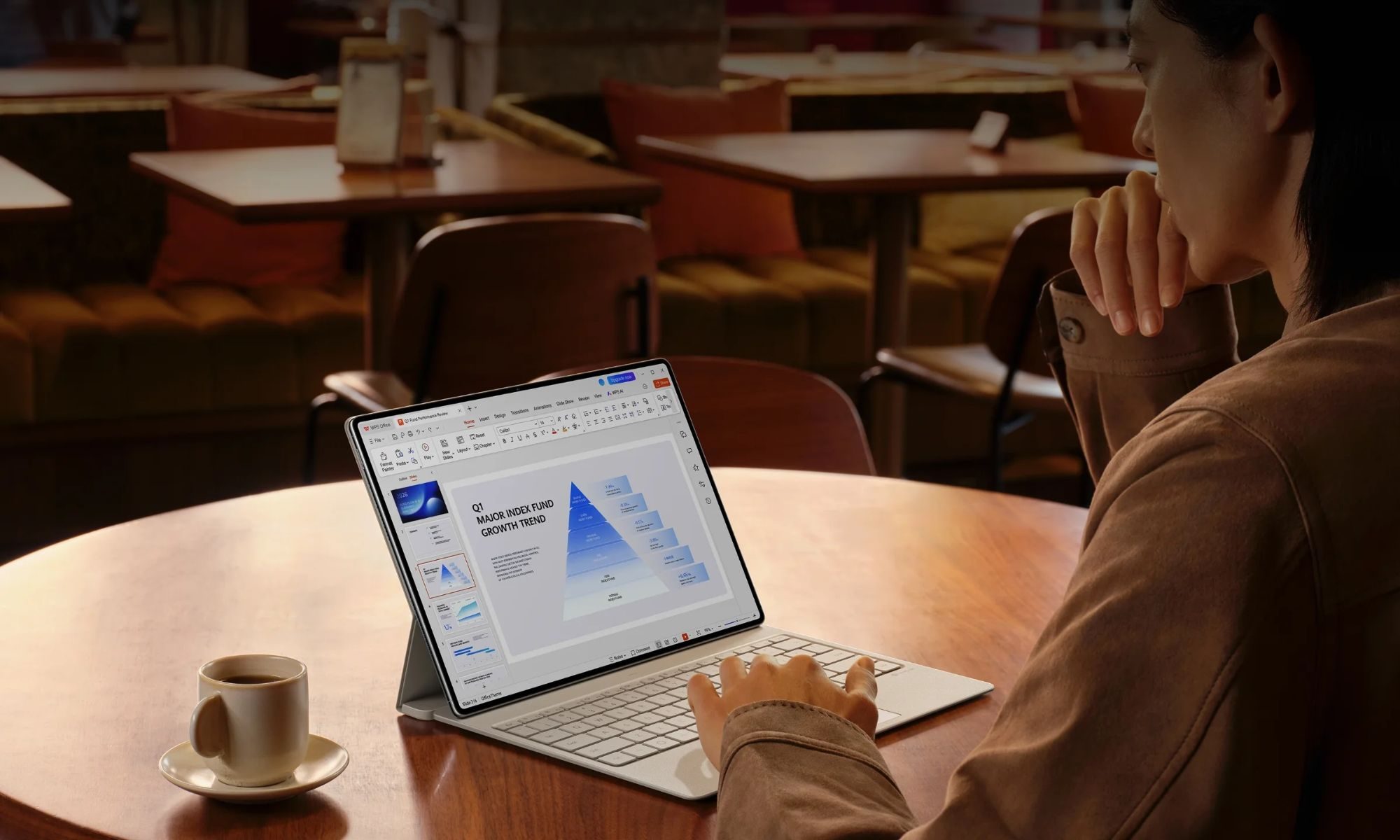
The display is equally premium. The tablet features a 13.2-inch 3K Flexible OLED PaperMatte panel with a 3000×2000 resolution, 144Hz refresh rate, and 1,600 nits peak brightness. Nano-level anti-glare etching is designed to reduce reflections without sacrificing image quality, while slim 3.55mm bezels help deliver a 94 percent screen-to-body ratio. On the other hand, the iPad Pro still gets its Ultra Retina XDR display with adaptive 120Hz ProMotion tech in its display.
Huawei is also pitching the MatePad Pro Max as a productivity device rather than simply a media tablet. It ships with HarmonyOS 4.3, offering Live Multitask for running up to three apps simultaneously alongside a desktop-style version of WPS Office complete with AI-powered tools for documents, spreadsheets, and presentations.
The optional Glide Keyboard strengthens that positioning with six rows of keys, 1.8mm key travel, and an integrated charging slot for the M-Pencil Pro. Meanwhile, Wi-Fi 7, Bluetooth 6.0, NearLink, and USB-C 3.1 ensure the connectivity matches the premium hardware. A 10,400mAh battery supports 66W fast charging and 40W wired reverse charging, giving users enough endurance for extended work sessions.
Great hardware still isn’t the whole buying decision
The MatePad Pro Max starts at €1,099 (approximately US$1,286) for the Space Gray model, while the PaperMatte Edition bundled with the Glide Keyboard costs €1,299 (approximately US$1,520). Buyers purchasing before July 31 also receive a 12-month warranty extension, a free pair of FreeBuds Pro 4, the M-Pencil Pro, and a €100 (approximately US$117) discount voucher.
Those launch offers certainly improve the overall value proposition. However, they also highlight the challenge Huawei continues to face outside China.
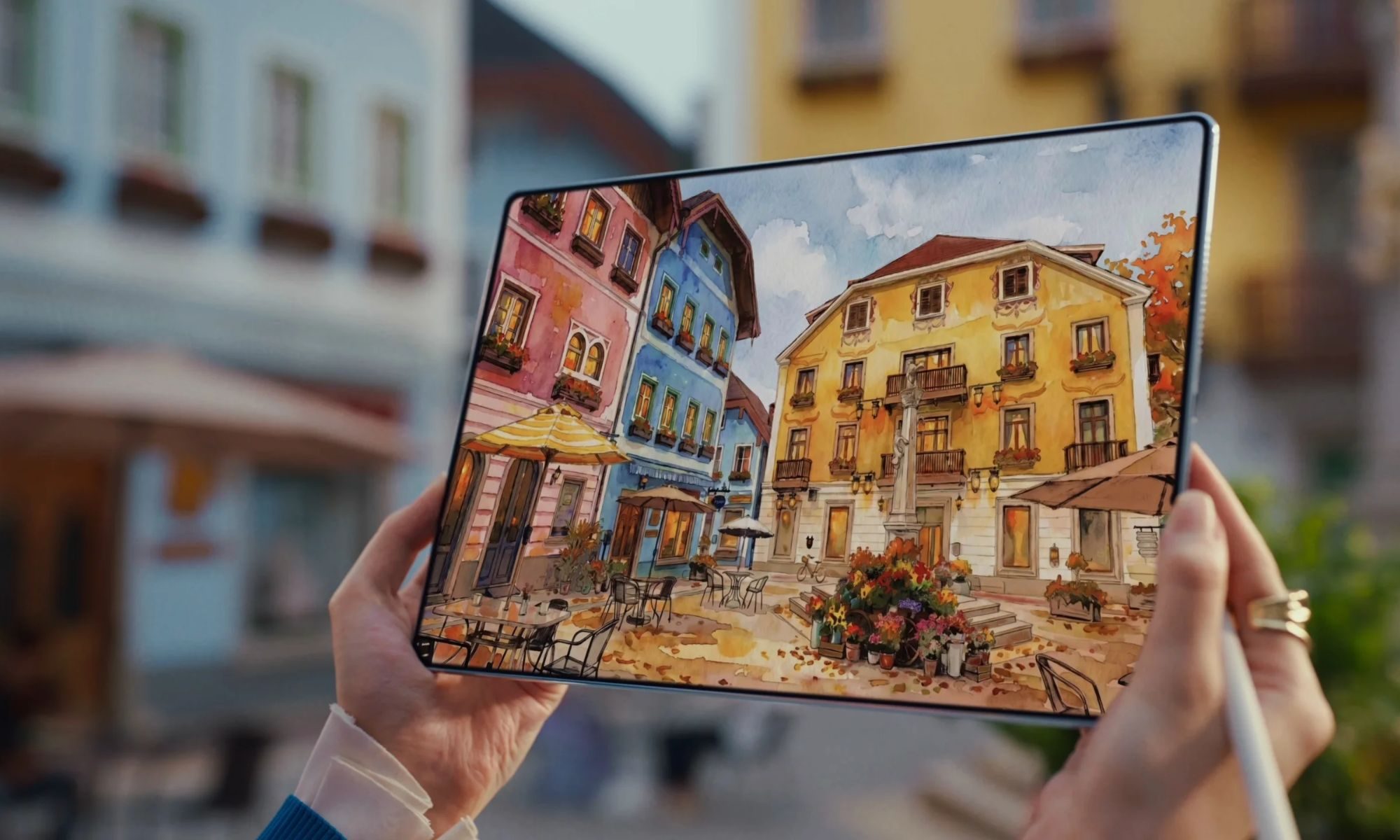
On paper, the MatePad Pro Max compares well with Apple’s iPad Pro and Samsung’s Galaxy Tab Ultra lineup. In some areas, including thickness, charging speeds, and anti-glare display technology, it arguably pulls ahead. Yet premium tablet buyers often choose an ecosystem as much as they choose hardware.
For users already invested in Huawei’s ecosystem, the MatePad Pro Max is easily one of the company’s strongest tablets to date. For everyone else, the absence of Google’s services and the broader Android app experience may remain the deciding factor. Huawei has proved once again that it can build world-class hardware. Whether that alone is enough to sway buyers away from Apple is a much harder question.