

Microsoft has unveiled two new concept products designed to bring artificial intelligence out of standard computer screens and directly into the physical workplace.
Dubbed “Project Solara,” the initiative introduces a new operating system platform tailored specifically for “agent-first” hardware devices.
The tech giant debuted two concept hardware models during its annual Build developer conference in San Francisco. Rather than running traditional applications, these devices are engineered to interact directly with autonomous AI agents – bots that can independently execute workplace tasks such as writing software code or organizing schedules.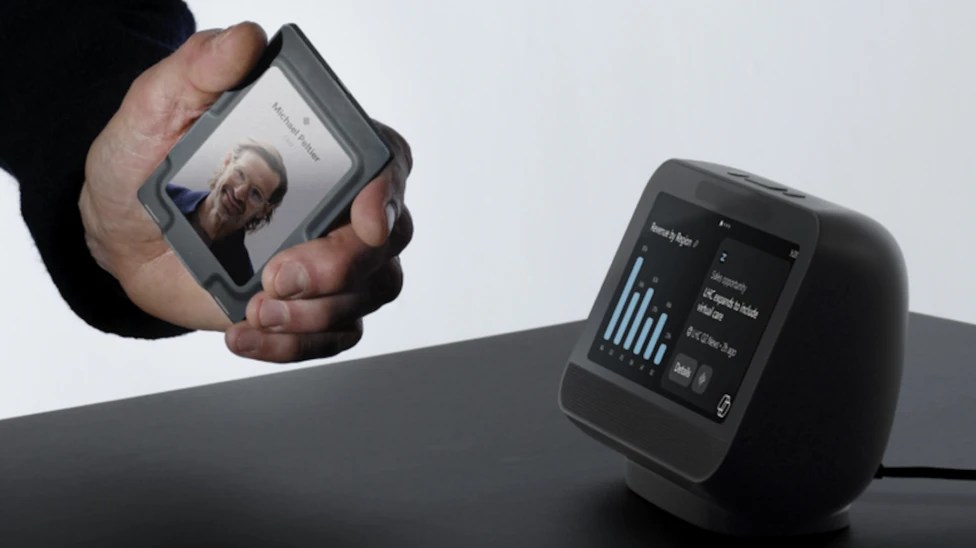
The first concept is a small, portable desktop cube (see above) equipped with a touch- and voice-activated screen. Designed to sit next to a PC, it acts as a dedicated dashboard for displaying priority tasks and managing AI workflows without forcing users to toggle between tabs.
The second device is a lightweight, wearable access badge that can be worn on a lanyard around the neck or clipped to a belt loop. The badge features 5G connectivity, a touchscreen, a fingerprint scanner for secure biometric login and a built-in camera.
During a demonstration at the conference, Microsoft executive Steven Bathiche activated the badge via his fingerprint, pointed it at the crowd, and successfully commanded the device to capture photos and transmit them to his computer for review.
According to Bathiche, the integrated camera is vital because it allows AI agents “to better understand and help take action on the environment around them.” However, the inclusion of cameras on workplace wearables is likely to draw scrutiny, echoing ongoing privacy debates surrounding other AI-centric devices like Meta’s smart glasses.
Microsoft Chief Executive Satya Nadella described the gadgets as a “new form factor” for technology, shifting computing from software programs that users must open to intelligence they simply invoke. The platform utilizes an enterprise version of Android rather than Windows, allowing it to run efficiently on lower-power chips provided by partners Qualcomm and MediaTek.
While hundreds of Microsoft employees are currently testing the prototypes internally, the company has not yet announced a timeline for a commercial market release. Instead, Microsoft plans to use ongoing pilot programs with external corporate partners to determine how these formats evolve.
The enterprise-focused project represents a strategic pivot for Microsoft following past hardware struggles. In 2024, the company halted production of its HoloLens augmented-reality headset after a decade of development and public testing complications with the US military.
With Project Solara, Microsoft aims to avoid a consumer gadget flop and establish a secure, managed platform for the future of automated enterprise work.
Subscribe to get the latest posts sent to your email.
The most reputable non GamStop casinos UK that offer games to your gaming adventure
Tech Digest, Tel: +44 7885 836842. [email protected]
Subscribe now to keep reading and get access to the full archive.
Continue reading