

“Sonos went back to the drawing board and delivered a truly rewarding hybrid speaker.”
Pros
- Clean looks and solid build quality
- Packs quite an audio punch
- waterproofing is an underrated perk
- Good mileage and replaceable battery
- Doubles as a power bank
Cons
- No power brick in retail box
- You can’t take calls
- Stereo pairing only over Wi-Fi
- Limited Bluetooth functionality
Quick Take
Sonos has had a rough couple of years. The 2024 app rollout turned into a disaster that still shows up in the support forums, and the hardware pipeline went quiet for so long that I’d genuinely started to wonder whether the company had decided to take a sabbatical from making new speakers. So when the Sonos Play showed up in the lineup at $299, I was obviously skeptical.
After six weeks of using it as my primary kitchen speaker, my weekend patio speaker, and my impromptu bathroom-radio speaker, I can confirm something I didn’t expect while unboxing this speaker. This one can bring back the irked Sonos fans. It sits between the Roam 2 and the Move 2, while delivering the best of both worlds.
At $299, in a market crowded with cheaper Bluetooth options on one side and pricier smart speakers on the other, it had to land precisely. Somehow, it did. It sounds good, packs a replaceable battery, doubles as a power bank, and still remains portable. It just loves Wi-Fi a little too much, and that often turns into a functional drawback.
Sonos Play specs: What you get from this middle-weight warrior?
| Amplifiers | Three class-H digital amplifiers tuned for the acoustic architecture. |
| Drivers | Two angled tweeters for crisp highs and one mid-woofer for deep bass. |
| Microphones | Far-field array with beamforming and echo cancellation. |
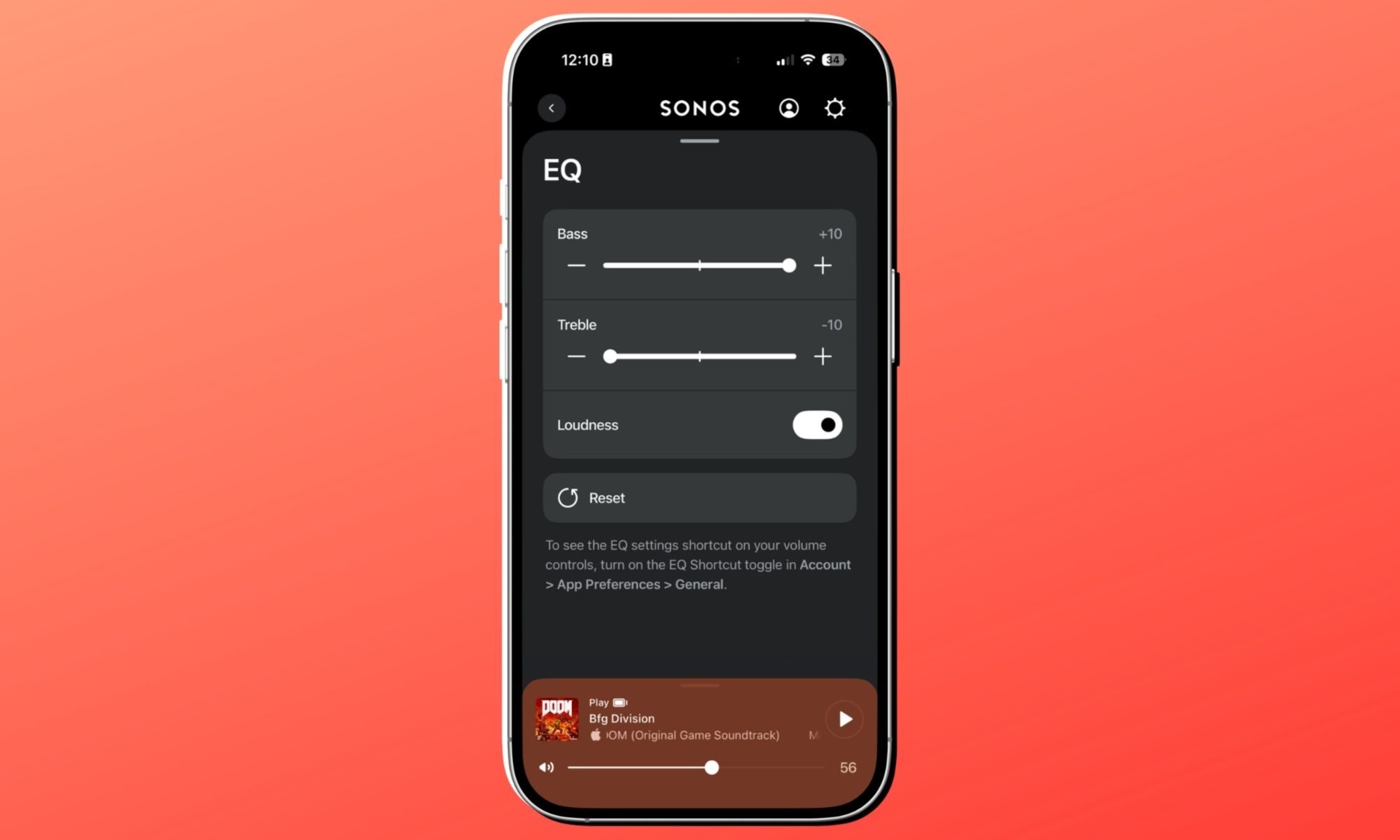
| Audio Tuning | Automatic Trueplay and adjustable EQ (Bass, Treble, Loudness). |
| Battery Life | Up to 24 hours of continuous playback; user-replaceable battery. |
| Charging | Includes Wireless Charging Base; supports USB-C PD (18W+). |
| Durability | IP67 rating (waterproof up to 1m for 30m) and drop resistant. |
| Connectivity | WiFi (802.11a/b/g/n/ac) and Bluetooth® 5.0. |
| Dimensions | 192.3 x 112.5 x 76.7 mm (7.57 x 4.43 x 3 in). |
| Compatibility | Sonos app (S2), Apple AirPlay 2, Spotify/TIDAL Direct Control. |
| Controls | Tactile buttons for playback, volume, and a physical mic privacy switch. |
| Sustainability | Made with bio-based plastics and FSC-certified recyclable packaging. |
| Box Contents | Sonos Play speaker, Wireless Charging Base, and Quickstart Guide. |
Sonos Play design and build quality: Clean, mean, and easy to lug around

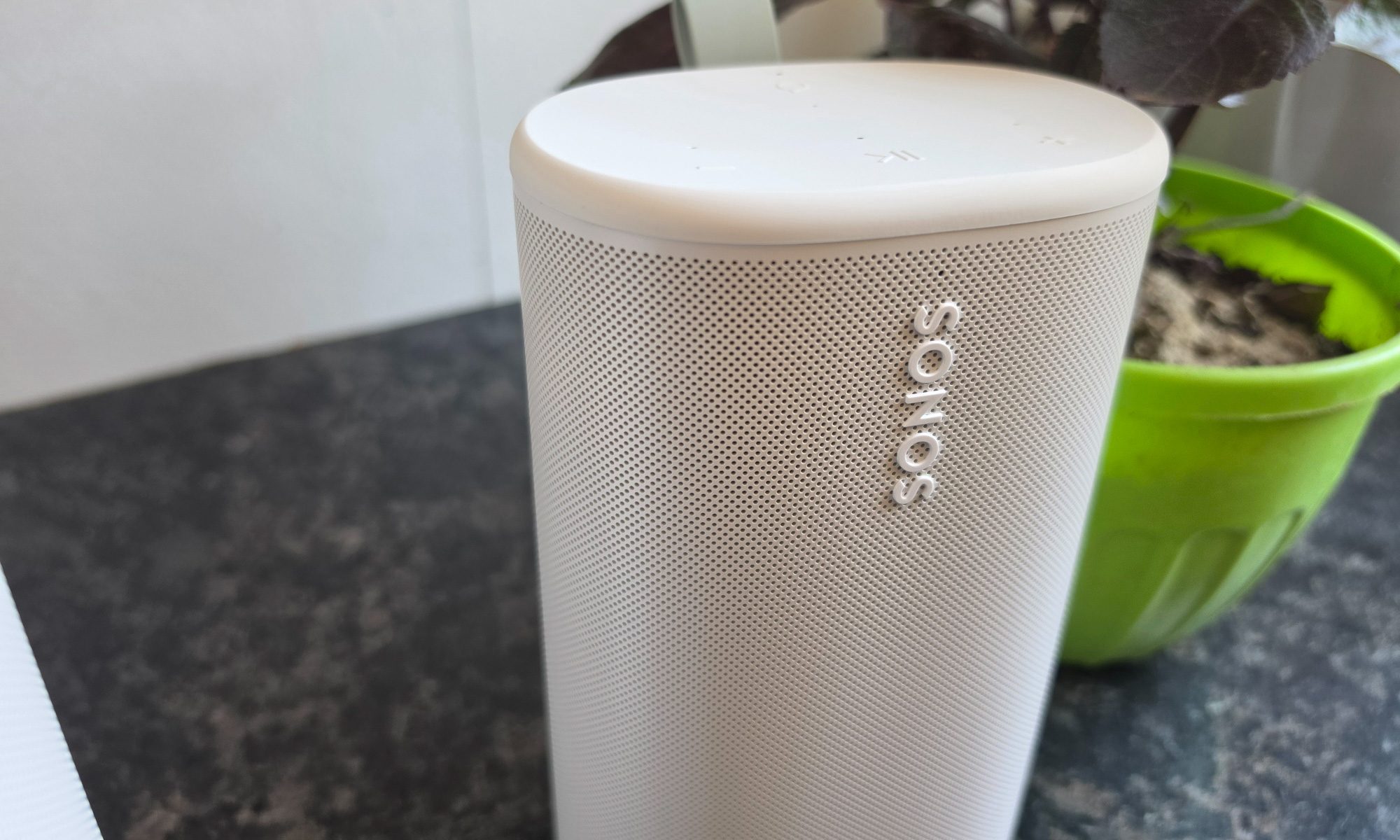
Pick up the Sonos Play, and the first thing you notice is the density. It weighs 2.87 pounds, which is deceptively heavier than what its size suggests. But that’s in a way well-built things tend to be. It stands a hair under eight inches tall, flaunting a stout tubular body with a subtle taper and a polycarbonate mesh. At the top, you’re greeted with a soft matte layer that hides fingerprints better than I expected.
Mine came in white. There’s a black option on the table, as well, but I’d pick the white variant because it blends more easily with the interiors, whereas the latter color option stands out as a dark monolith. Either way, this is firmly in the “grown-up audio” school of design. The speaker disappears onto a bookshelf or kitchen island instead of screaming for attention the way some rugged portables do.
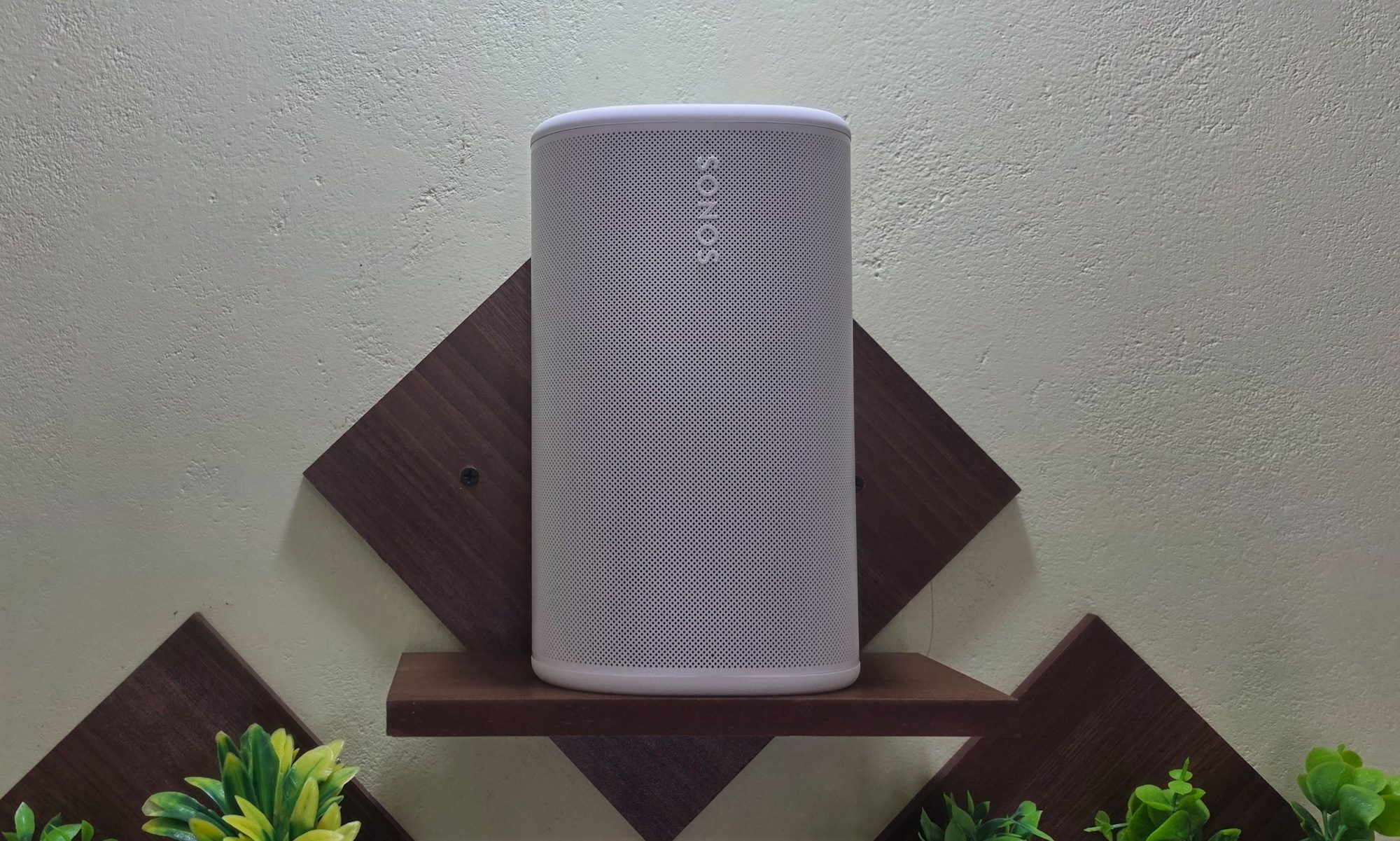
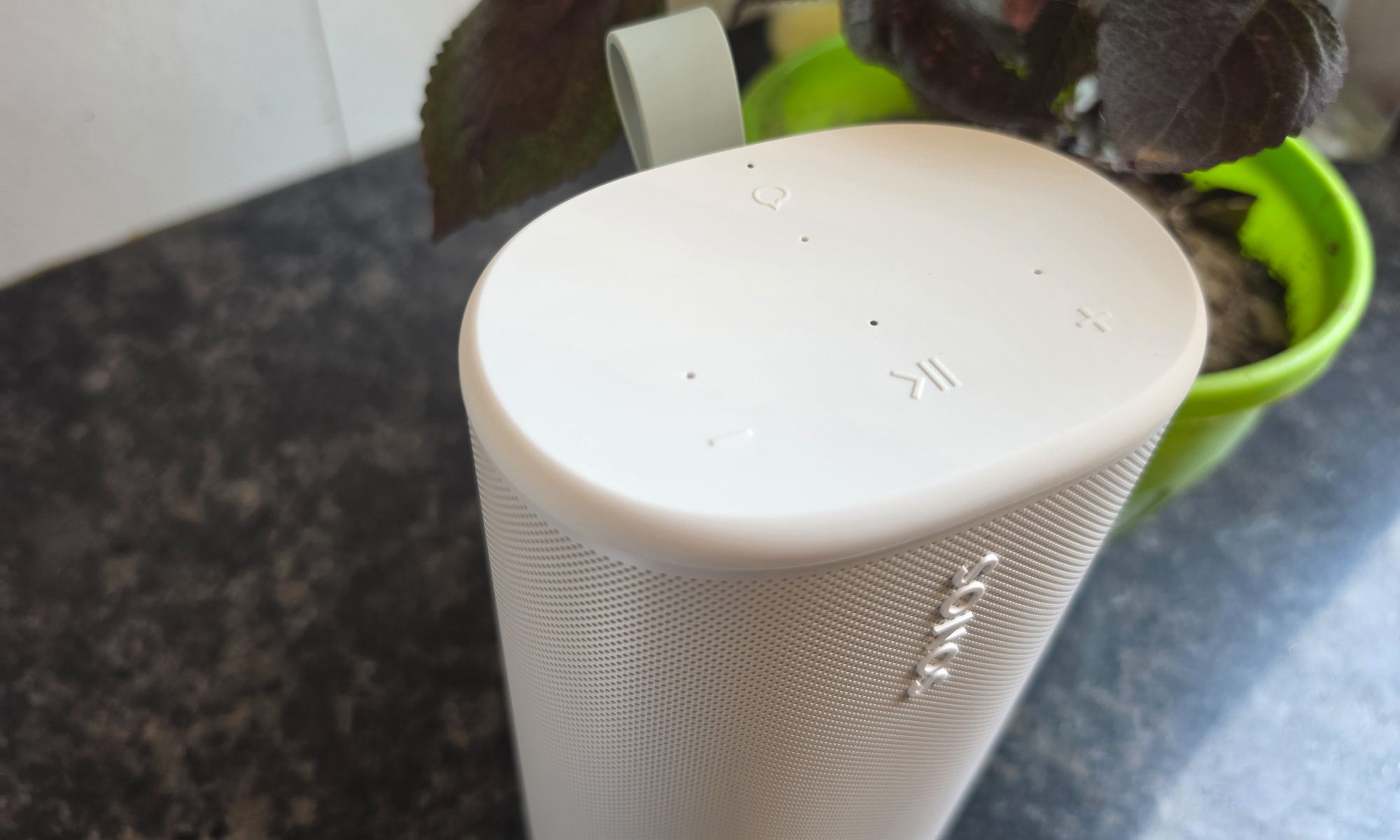
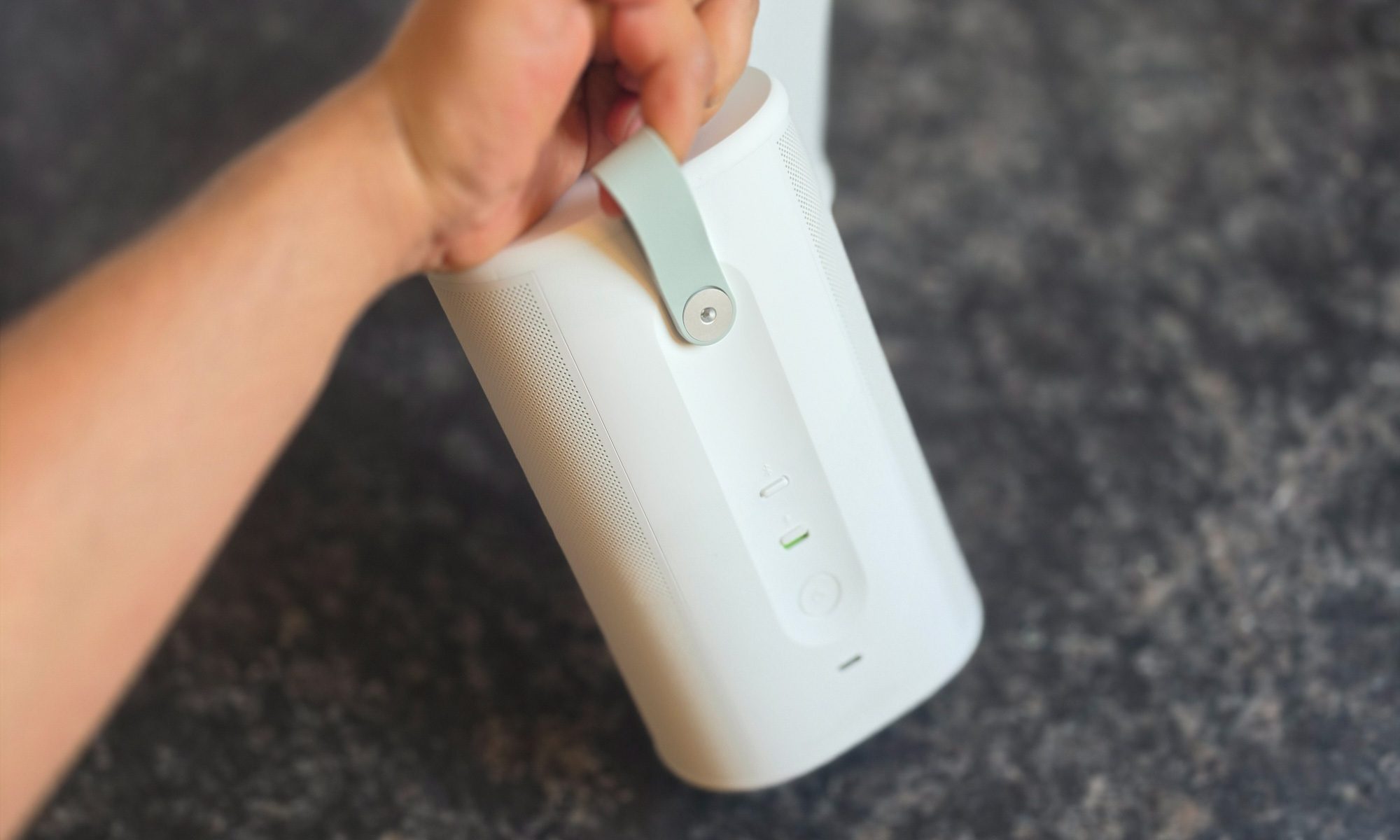
The small choices are where you can tell Sonos really pored over the details. The controls on top are real, clicky, physical buttons, and not the finicky touch-capacitive sliders you’ll find on the Era line. That difference becomes apparent the moment your hands are wet, or you’re outside in 45-degree weather with sweaty palms, or you’re trying to skip a track with moist fingers after a workout.
The touch-cap sliders feel premium in the showroom and tactically infuriating in the kitchen. Sonos clearly took notes and went with a thoughtful approach. The rear has a rubberized utility loop you can hook a finger through, and I kept catching myself grabbing the speaker by that loop and moving it from counter to patio table without consciously thinking about it coming loose or snapping. It’s a small thing that turns out to matter every day, and I’m glad Sonos didn’t compromise on the material quality here.

Durability has been baked in seriously. The IP67 ingress protection rating means the device is fully dust-proof and can withstand submersion in up to one meter of water for 30 minutes. But let’s be honest here. You likely aren’t going to treat this speaker to a “pool oopsie” and watch it prove the durability claims. It doesn’t float, which is the one trick the Bose SoundLink Plus has over it.
The shock-absorbing mesh exterior and the ruggedized internal housing have already shrugged off a couple of careless bumps during my testing without a cosmetic scuff to show for it. Phew! The whole design philosophy here is hybrid. The Sonos Play is just as happy docked on the wireless charging base in your living room as it is blasting music in wireless mode atop a fridge, and it feels equally at home if you’re lugging it around.

Yanked off the base and tossed in a tote bag with a wet towel, it acts like a rugged outdoor speaker. Most products in this price band can do one of those two jobs convincingly. The Play does both, and that’s no mean feat. Whether you want a speaker to complement your lifestyle or the adventure mood swings, the latest from Sonos fares well on either end of the spectrum.
Score: 9/10
Sonos Play audio quality: Pleasing, with a serious stereo ace up its sleeve
Sound quality is where Sonos earns the premium asking price. Even though the audio cabinet is small enough to carry in one hand, it somehow houses three Class-H digital amplifiers driving two angled tweeters and a dedicated mid-woofer, plus a pair of passive radiators handling the low end.
The tweeters fire at roughly right angles to each other, which is the engineering trick that gives the Play a soundstage no single-enclosure portable has any right to produce. Most speakers this size sound like they’re firing from one point in space. The Play sounds like it’s coming from a wider strip than the actual cabinet, and on tracks with strong stereo imaging and separation, you actually hear the trick working.
It’s not magic, exactly, but for a sub-eight-inch speaker, it’s the closest thing to it. The midrange is where the signature Sonos character lives, one that has been the company’s audio fingerprint for years. Vocals come out pleasant and natural, with a warmth-inclined, slightly-forward presence that makes it a lovely choice for podcasts and audiobooks.

If you’re into listening to your morning news briefings, they sound like a real person standing in the room rather than an audio stream with weird tinny resonance. On denser tracks, the speaker keeps everything legible without me having to crank the volume to compensate. The bass isn’t earth-shaking, but you can still feel the thump. It isn’t quite the kick-in-your-chest low-frequency output, but there’s still enough oomph to enjoy those bass-boosted playlists.
The dual passive radiators add real weight to the low-mids, and on dance tracks at outdoor volume, the speaker holds its own instead of turning the instruments into a screeching cacophony of distortion. I’ve spent a lot of time with portable speakers that sound great at certain volume levels but awful at others. The Play is a rarity, thanks to a flatter volume curve that maintains composure across the board range.
Between the crooning of Hamaki and Nayyara Noor, and the autotuned drops by T-Pain, there’s barely any mainstream track the speaker can’t handle. If you’re listening to layered instrumentals, some overlap happens once you cross the 60% volume levels, but within the halfway threshold, the likes of Tom Holkenborg are a blast to hear.
One reasonably clever trick is Automatic Trueplay. The Play’s onboard microphones continuously sample the room and adjust the EQ on the fly. The first time I really noticed it working was when I carried the speaker mid-song from a cramped bathroom into a spacious living room.
The tuning shifted within a couple of seconds, and the bloated bass that had been booming in the bathroom got pulled back to something sensible. It’s not a fix-everything feature, and on a windy patio with no walls to reflect from, the soundstage understandably narrows. But in practice, it means you don’t have to think about where you’re putting the speaker. I’d call it a win.
Score: 9/10
Sonos Play app and software: Gets the job done, but still needs some polish

Let’s address the elephant in the room, which is the Sonos companion app. After the 2024 redesign meltdown, a high number of long-term loyalists had a genuinely bad spell with woes such as randomly disconnecting speakers, lost groups, and broken Trueplay, to name a few. I won’t pretend the experience is fully back to where it was before the redesign, but it’s much, much closer than it was six months ago.
Stereo pairing works without any hiccups. Settings stick instead of mysteriously resetting overnight. The integration is still the actual reason you’d pay Sonos money over any random Bluetooth speaker. If you want Apple Music, Spotify, Tidal, YouTube Music, and a handful of internet radio stations on call from one app, this is the cleanest way to do it on the market.

What I like more than anything else, though, is that the Play has finally fixed the Bluetooth/Wi-Fi schism. Older Sonos speakers forced you into a binary. You had to pick between the high-fidelity multi-room Wi-Fi convenience or the dumber Bluetooth world. Switching modes felt like punishment, and you couldn’t group across modes at all.
The Play now supports Bluetooth grouping of up to four Play speakers, or you can pair two Plays over Wi-Fi for stereo syncing. Bring them home, drop them on their wireless bases, and they automatically rejoin the rest of your Sonos system. I love these quality-of-life conveniences.
Voice control comes in two flavors. Amazon Alexa works the way it works everywhere else, with the same charms and the same low-level eavesdropping concerns. Sonos Voice Control is the more interesting option, by the way. It processes commands locally on the speaker itself, so nothing leaves the device. Plus, the assistant who does all the talking has the voice of Giancarlo Esposito of “Breaking Bad” fame.
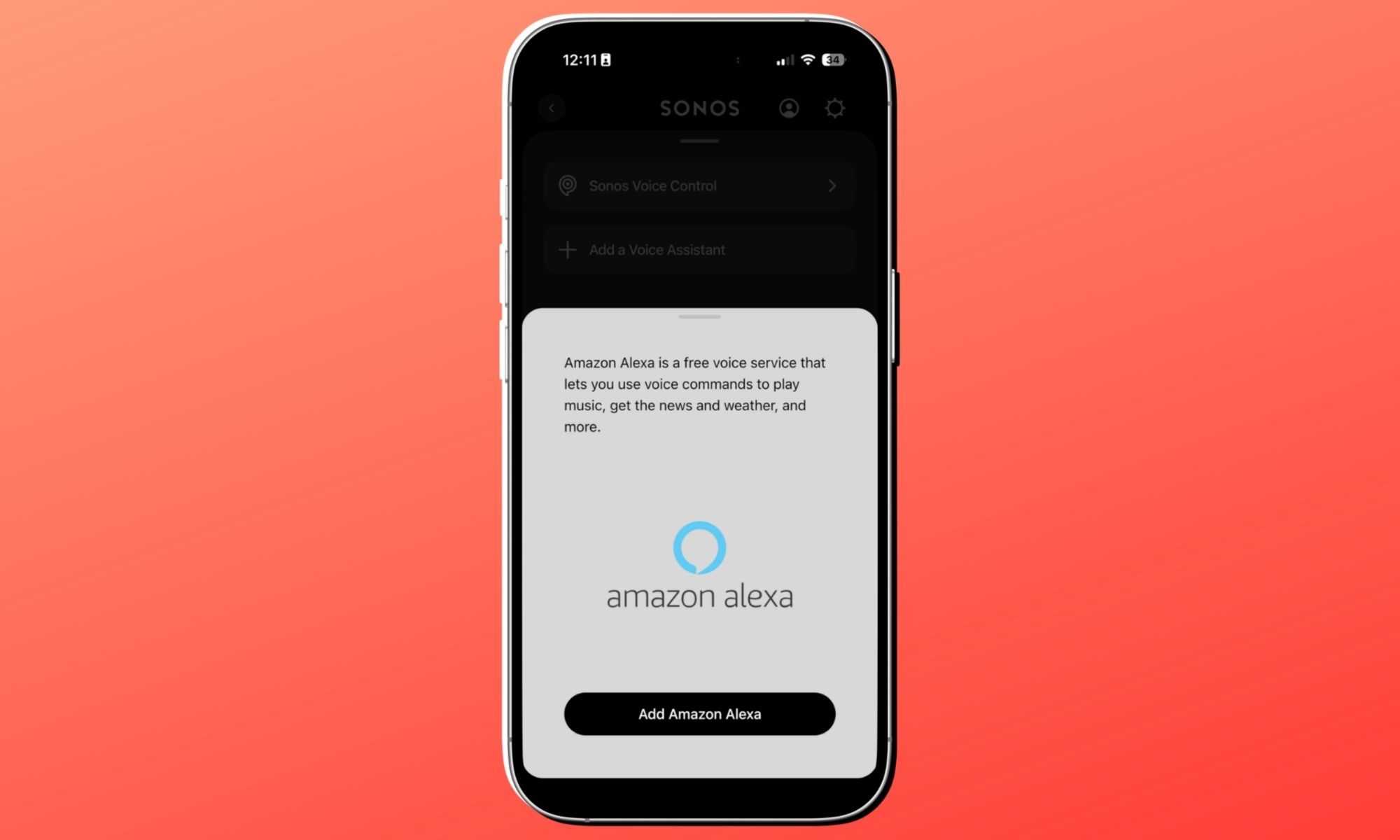
It’s a small touch but a delightful one, and the voice is pretty soothing to hear. The local processing also means it’s noticeably snappier than cloud-based assistants for the small handful of commands it actually supports. It’s not outrageously smart. For the most part, it handles play, pause, next, volume, group, and ungroup. You get the drift. In hindsight, these are the core commands you actually use 95% of the time.
The one persistent nag is that getting the speaker into the Sonos system still requires Wi-Fi for the initial setup and any system-level configuration. If you only ever plan to use the Play as a dumb Bluetooth speaker on a beach somewhere and never touch the app again, that’s a big hurdle.

The newer Wi-Fi 6 and Bluetooth 5.3 radios are up to the mark, though not the latest protocols. In my testing phase, pairing has been quick and reliable. Reconnections, however, are iffy. Plus, there’s still a sub-second delay between issuing an in-app command and it registering on the speaker. But the drill is clear. Sonos still very much wants you to live in their app, and the Play isn’t shy about reminding you of it, with the connectivity limitations in tow.
Score: 8/10
Sonos Play battery life: This one’s built for longevity
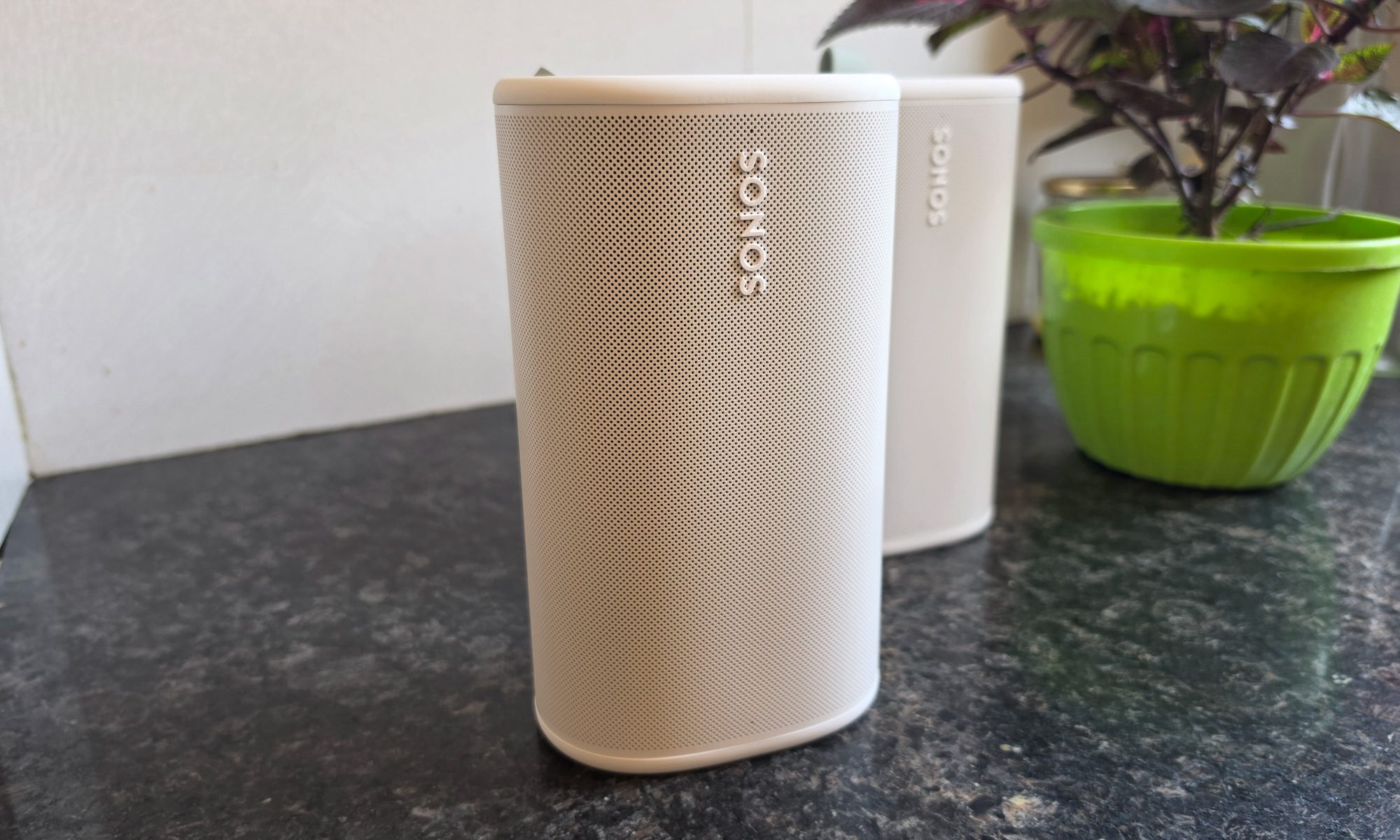
Sonos quotes 24 hours of playback on a charge. In real life, while listening at moderate to loud volumes (imagine filling a kitchen during or a moderate lobby), I’m seeing 14 to 17 hours, which is not too bad for a speaker of this acoustic class. The charging story is the most thoughtful part of the whole package.

The Play ships with a wireless charging base that doubles as a permanent docking station. You simply drop the speaker on the base, and it picks up where it left off in the multi-room system without any manual fussing. For travel, the bottom has a USB-C port that’s also bi-directional, meaning the Play can charge a dead phone from its own battery in a pinch.
I haven’t had to use that yet, because I always carry a wireless power bank with me, but it’s the kind of feature you’ll be grateful for exactly once and remember forever. The base itself sits flush enough on a counter that I keep mine permanently on the kitchen island, and the speaker just lives there, fully charged, ready to grab.
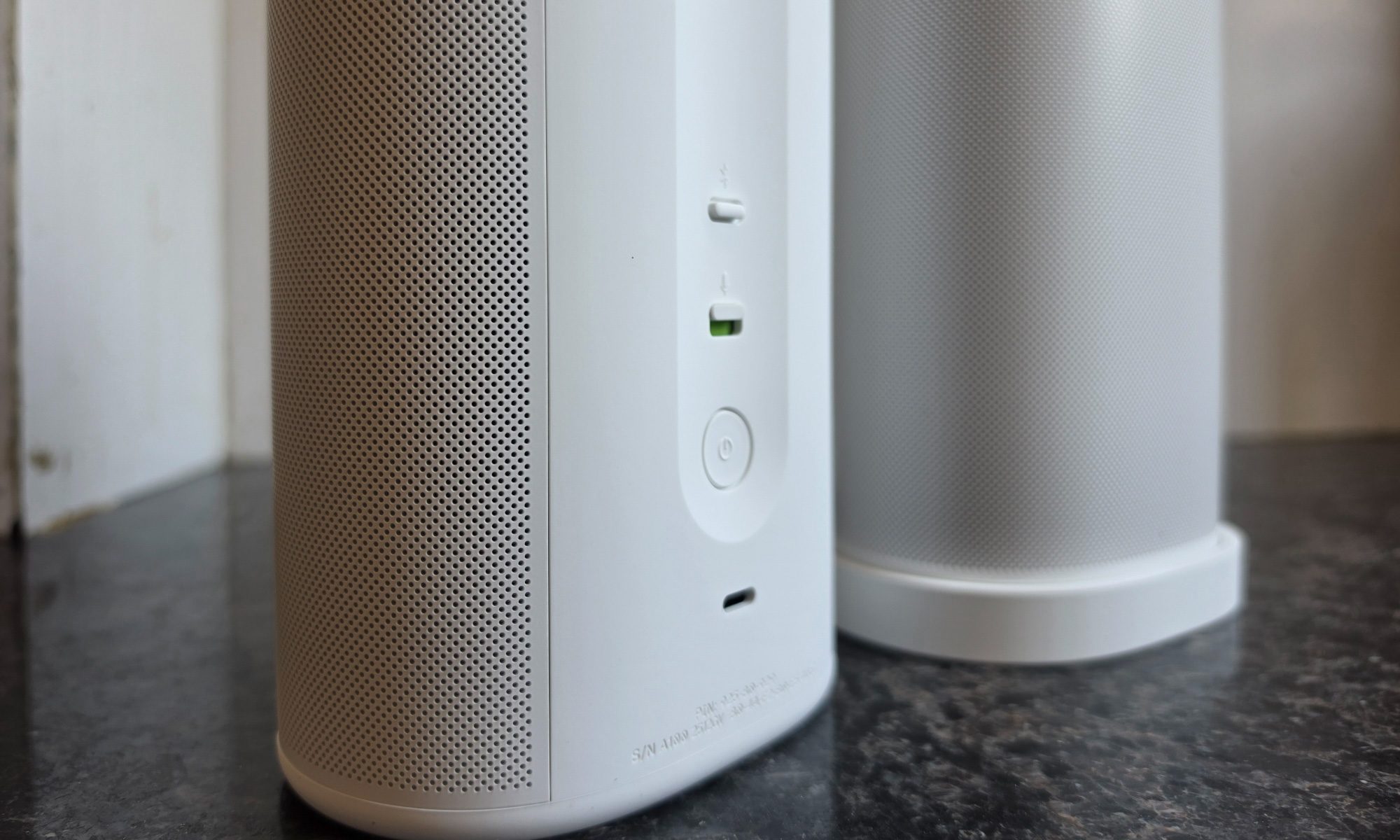
The biggest surprise is that the battery is user-replaceable. It shouldn’t come as a surprise that Lithium cells degrade over time. Whether it’s your tiny earbuds or the hulking cell packs in an electric car, the electrochemical degradation is unavoidable. After three or four years of daily use, every portable speaker on earth gets noticeably worse at holding a charge. The solution? Buy a new one and add to the e-waste pile.
Sonos is taking a better route. The Play lets you swap the cell yourself with a few screws and a replacement part, extending the useful life of a $299 piece of hardware potentially by another half-decade. This should be a checkbox feature for the entire industry, but it isn’t, so credit where it’s due. Sonos took the complex (read: more expensive) engineering path here, and the world is better for it.

The one thing missing from the box is the wall adapter. You get the wireless base and a cable, but if you don’t already own a USB-C PD brick rated at 18W or 45W, you’ll have to fork extra cash for it. Sonos frames this as a sustainability decision, just like Apple and Samsung, which means fewer bricks ending up in landfills, since most of us already have one lying around.
That argument is at least partially honest, but on a $299 product, it still feels like a pinch. If your customer is paying premium money for a premium speaker, just throw in a brick, will ya? That’s the one piece of friction in an otherwise unnaturally well-thought-out package.
Score: 10/10
Should you pick up the Sonos Play?
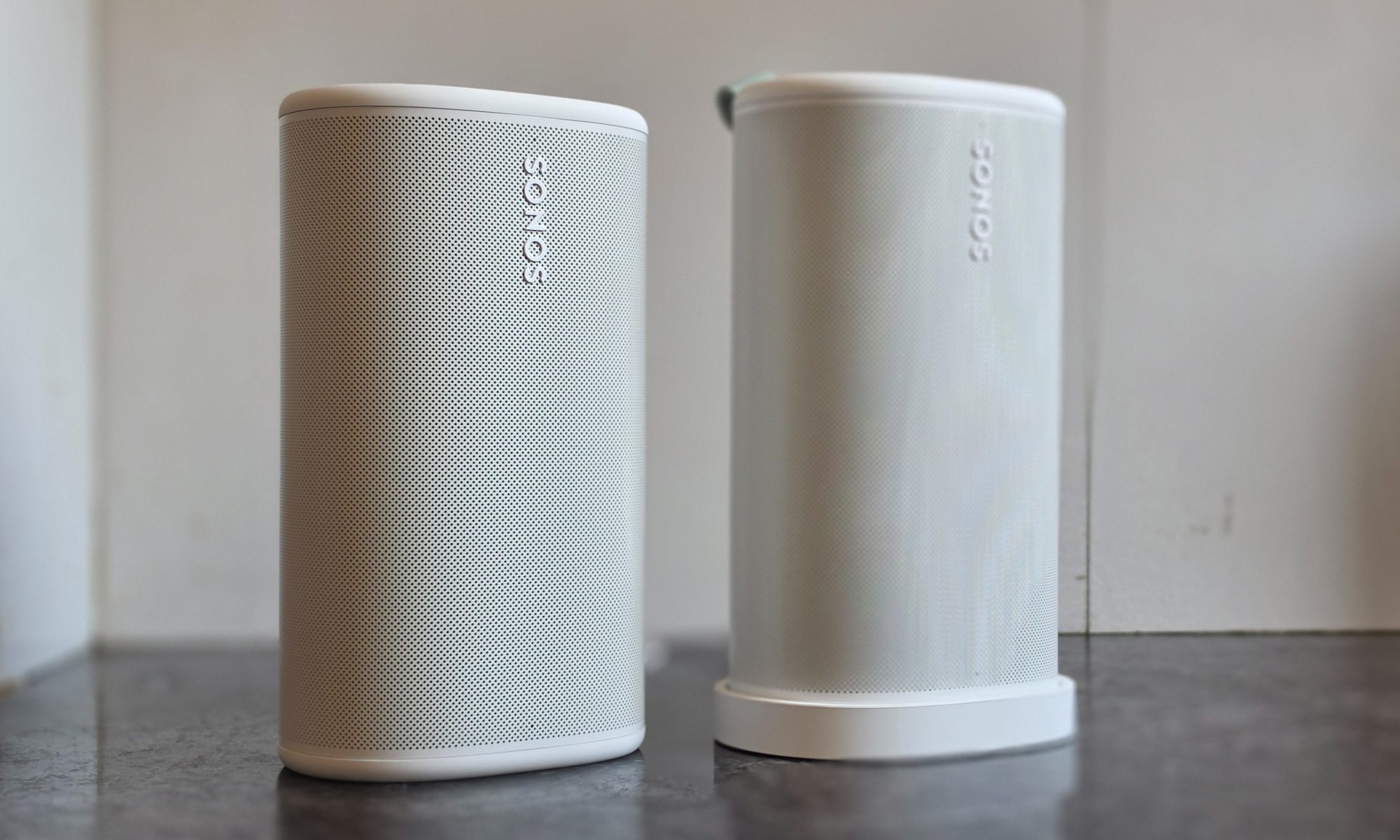
The Play is the most coherent answer Sonos has had to “which one should I buy?” in years. If you want a speaker that lives in the kitchen on weekdays, follows you to the patio on Saturday, and comes camping with you on Sunday, this is the one. The acoustic step-up is significant for its class, especially if you are confused between the Era 100 and the Roam.
The Play is for the hybrid user: someone who wants Sonos’s seamless ecosystem at home but doesn’t want to own a separate, cheap Bluetooth speaker for outdoor use. If you’ve ever found yourself with two speakers in two different ecosystems and wished one device could do both jobs without compromise, the Play is the one to pick.
It’s a thumping comeback for Sonos. The hardware is excellent. The software is mostly recovered. The price is fair for what you’re getting. This is the kind of device you ship to win customers after a fiasco. Whether one good product is enough to repair the trust is a longer question, but as a piece of hardware in 2025, the Play deserves all the applause (and easy recommendation).
Why not try
If the Sonos Play doesn’t quite fit the bill for you, there’s a healthy bench of options you can consider:
Bose SoundLink Plus: The closest competitor to the Play. Priced at $269, it delivers a warmer sound profile and the genuinely useful trick of floating in water if you drop it in the pool. What you give up is the Sonos ecosystem. No Wi-Fi multi-room, no app-based streaming integration, and no whole-house grouping. If you’ve never owned a Sonos and never plan to, the Bose is the simpler choice without sacrificing audio quality.
Sonos Move 2: It’s the bigger sibling for buyers who need a primary-room speaker that occasionally travels rather than the other way around. At $499, it’s significantly pricier, but the extra cabinet volume translates into genuinely deeper bass and substantially higher peak loudness. If you regularly host backyard parties or you want a single speaker capable of filling a large living room, the Move 2 earns its weight.
JBL Charge 6: The budget-conscious pick at $170, though the sticker price is $200. It’s rugged, loud, and ships with its own power bank trick. You’re giving up the soundstage, the Wi-Fi, the multi-room, and the smart-home integration. But if good ‘ol Bluetooth is all you need, it’s a hard speaker to argue against on pure value.
UE Everboom: This one typically goes for $179.99 and leans heavily into a punchy sound output. The audio fidelity isn’t in the same league as the Play, but the design and durability are excellent for the money. If the Play is the grown-up choice, the Everboom is the fun one. Both have their place, but the Boom app is loaded with features that are tailor-made for outdoor parties.
How we tested

For a spell of three weeks, the Sonos Play speaker had a place atop my kitchen counter and my workstation. I used it standalone and in a stereo pair, as well. Over the course of testing, it was pushed at movies, music streaming (Apple Music, Amazon Music, and Spotify), live TV, and podcasts. It was connected to a 500Mbps Wi-Fi connection and linked to an iPhone 17 Pro.
I also traveled with the Sonos Play speaker, using it as a portable speaker in the car, camping sites, and exclusively as a Bluetooth speaker in a large hall that also served as my vacation work spot. I used a generic 50W power brick to charge the speaker and a generic USB Type-C cable to use the speaker as a power bank to charge my phone.
For comparison, I tested it against rival speakers in a closed room with minimal acoustic interference, playing the same tracks via Apple Music.