
Atherosclerosis: Can AI help your doctor detect it?
Beef tallow, seed oils, and full-fat dairy: Are any of them heart-healthy?
Cardiac amyloidosis: Better detection and new treatments
Lose more weight and protect your heart by pairing exercise with eating fewer calories
American Cancer Society expands testing recommendations for colorectal cancer screening
Heart risks from cannabis remain hazy but warrant caution
Harvard study links ultra-processed foods to higher rates of cognitive decline, dementia
A guide to the DASH diet
Calorie deficit explained: Is it a safe, sustainable approach to weight loss?
Prediabetes diet: How to help prevent progression to diabetes
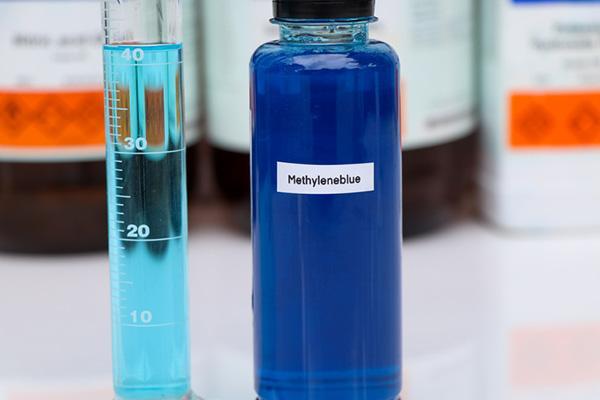
A vibrantly colored cobalt-blue synthetic dye with a long history of highly specific medical applications – treating malaria or a rare blood disorder called methemoglobinemia, for instance – methylene blue has some recognized medical uses. However, despite recent reports of off-label uses that have popped up in the news over the past few months, the only FDA-approved use for methylene blue is for the treatment of methemoglobinemia, a rare condition that restricts the ability of red blood cells to deliver oxygen throughout the body.
Methemoglobinemia is typically caused by exposure to certain medications, chemicals, or recreational drugs; methylene blue primarily treats it by increasing hemoglobin’s oxygen-binding capacity. (Blue-tinged skin, resulting from inadequate oxygen levels in the blood, is a hallmark symptom of methemoglobinemia, so it’s somewhat ironic that the treatment itself is a shocking blue color.)
But the short-term use of a pharmaceutical-grade product in a controlled setting under the supervision of a skilled medical provider is different than buying an unregulated supplement off the internet and taking it every day because you’ve heard that it will give you loads of energy by “enhancing mitochondrial efficiency.”
In light of the increased attention being paid to the inky liquid, it makes sense to learn a bit about methylene blue’s history, how it works, and whether its various health claims stand up to closer scrutiny.
As one of the world’s oldest organic dyes, methylene blue was first used in 1876 as a textile dye. Within a few years, scientists were using it to stain microorganisms to help diagnose certain infections. In 1891, it was found to be useful to treat malaria, thus making methylene blue “the first synthetic compound ever used as an antiseptic in clinical therapy and the first antiseptic dye to be used therapeutically,” according to the authors of a Medicinal Research Reviews paper on the compound.
Methylene blue is used off-label for several medical conditions, including
Dr. Joseph D. Feuerstein, an associate professor of medicine at Harvard Medical School and clinical chief of gastroenterology at Beth Israel Deaconess Medical Center, says that applying methylene blue to the colon epithelium during a colonoscopy creates a “great contrast, where you can actually see it enhance the detection of polyps, and precancerous growths in the colon in general.” He uses it mostly in patients with longstanding inflammatory bowel disease (IBD) because of their increased risk for colorectal cancer
Besides aiding in the detection of multiple types of cancerous and precancerous lesions, methylene blue is sometimes combined with light therapy (such as that from a laser) to help treat lung cancer, breast cancer, and others.
As the public grows hungrier for anti-aging products with the potential to increase not just lifespan but health span, the popularity of supplements like vitamins, herbs, and nootropics (andamp;ldquo;smart drugs”) has surged. In recent years, methylene blue has been added to this list. Although evidence of some proposed health benefits are inconclusive, advocates of methylene blue suggest that it can:
Because it’s shown promise in protecting mitochondria – the tiny structures that serve as the energy-producing powerhouses of cells that weaken as the decades tick by – people have started to promote methylene blue as a way to slow cellular aging, including in the brain.
As with any drug, it’s important to remember that there are no magic bullets, and any study suggesting that the newest hot product clears brain fog or fights cancer requires confirmation by other independent researchers. In fact, a 2023 paper published in the Journal of Cerebral Blood Flow & Metabolism reported that methylene blue (in similar doses studied by researchers at The University of Texas at Austin who claimed the compound had memory-enhancing properties) led to a ∼8% decrease in human brain blood flow.
Other researchers have pointed out that even pharmaceutical-grade methylene blue contains impurities, and that industrial-grade or chemical-grade methylene blue, like that sold as a stain or dye, should not be used in humans or animals. If someone ordered the wrong type of methylene blue off the internet, they could end up quite ill. (If you search for “methylene blue” on Amazon, for instance, you could end up inadvertently purchasing fish tank cleaner, as methylene blue is also used as an antifungal aquarium disinfectant.)
The blue tonic on so many people’s lips has other significant risks. For instance, methylene blue is a monoamine oxidase (MAO) inhibitor, a type of drug used to treat depression. It’s also structurally similar to tricyclic antidepressants. This is likely why it’s been touted as a nonprescription alternative to fight depression. But if a person is already taking certain antidepressants such as fluoxetine (Prozac) or duloxetine (Cymbalta), and adds methylene blue to their routine, it can result in a dangerous and sometimes fatal interaction.
In the race to see who can live the longest and healthiest, OTC compounds like methylene blue often gain intense attention. But they should also engender intense scrutiny. It’s critical to keep in mind that just because a particular drug or supplement works in a highly specific clinical setting (like breast cancer detection), that doesn’t necessarily mean that it can or should be used by the general population.
Leslie Goldman, MPH, Health Writer
Robert H. Shmerling, MD, Senior Faculty Editor, Harvard Health Publishing; Editorial Advisory Board Member, Harvard Health Publishing
As a service to our readers, Harvard Health Publishing provides access to our library of archived content. Please note the date of last review or update on all articles.
No content on this site, regardless of date, should ever be used as a substitute for direct medical advice from your doctor or other qualified clinician.
Atherosclerosis: Can AI help your doctor detect it?
Beef tallow, seed oils, and full-fat dairy: Are any of them heart-healthy?
Cardiac amyloidosis: Better detection and new treatments
Lose more weight and protect your heart by pairing exercise with eating fewer calories
American Cancer Society expands testing recommendations for colorectal cancer screening
Heart risks from cannabis remain hazy but warrant caution
Harvard study links ultra-processed foods to higher rates of cognitive decline, dementia
A guide to the DASH diet
Calorie deficit explained: Is it a safe, sustainable approach to weight loss?
Prediabetes diet: How to help prevent progression to diabetes
Mind & Mood
Diet and nutrition
Pain
Get the latest in health news delivered to your inbox!
© 2026 Harvard Health Publishing® of The President and Fellows of Harvard College
Thanks for visiting. Don’t miss your FREE special health report Living Longer, Living Well!
PLUS, don’t miss out on your 25% off promo code.
Sign up to get tips for living a healthy lifestyle—You’ll discover powerful, research- backed strategies for health longevity drawn from Harvard Medical School experts—ways to eat for a longer life, build strength and flexibility to stay independent, protect your bones, heart, and brain as you age, and even cultivate the habits linked with “super-agers” who stay sharp and active well into their 80s and 90s—all delivered to your email box FREE.
Health Alerts from Harvard Medical School
And a FREE copy of the new special health report Living Longer, Living Well!
Sign up to receive HealthBeat emails from Harvard Health Publishing and get helpful tips that support long-term health and longevity… learn simple exercises to improve your balance… find out which foods are linked to better brainpower… keep inflammation under control… understand your options for cataract treatment… all delivered to your email inbox FREE. PLUS, you'll get the latest news on medical advances and breakthroughs from Harvard Medical School experts, and special offers on content from Harvard Health Publishing.
Stay on top of latest health news from Harvard Medical School.
Plus, get a FREE copy of Living Longer, Living Well!.
Stay on top of latest health news from Harvard Medical School.
Plus, get a FREE copy of Living Longer, Living Well.